

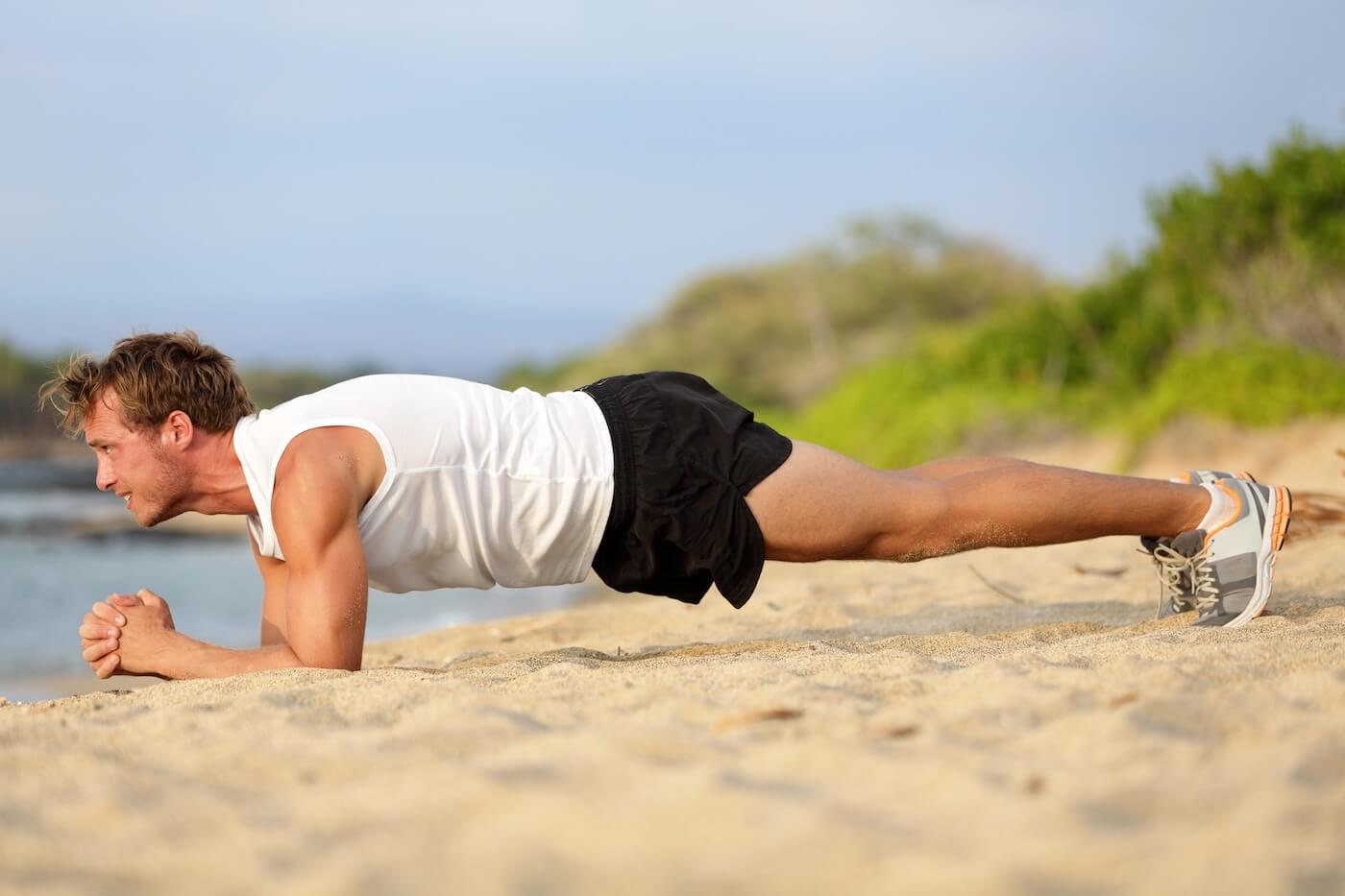
When most people think about core strength, they picture six-pack abs. Crunches. Planks. A flatter stomach. And many people who do all of those things consistently still end up in our office with back pain, wondering what they are missing.
But here is the thing: some people with visible, well-defined abdominal muscles still struggle with back pain, poor posture, leaking during exercise, or instability during movement. And that is because true core strength has very little to do with what you can see in the mirror.
Your core is the foundation for nearly every movement your body makes. It influences how you breathe, stand, lift, walk, run, and recover from injury. When it functions well, your body moves efficiently and with less strain. When it does not, other muscles and joints compensate, and that compensation is usually where pain begins.
At Breakaway Physical Therapy, one of the most common things we help people understand is that core training is not about endlessly tightening your stomach. It is about building a coordinated system that supports your entire body, not just during workouts, but in everything you do.
What Most People Get Wrong About Core Strength
The fitness world has done a good job of equating core strength with ab definition. But those are two very different things.
Visible abs reflect low body fat and superficial muscle development. Functional core strength reflects how well your deep stabilizing system coordinates during movement. You can have one without the other, and in a physical therapy setting, we see this all the time.
People come in with strong-looking midsections and significant back pain. Others have no visible ab definition at all but move with excellent stability and control. The difference is not size or aesthetics. It is coordination, timing, and the ability of your core system to respond efficiently under load.
Abs vs Core: What Is the Difference?
Your abdominal muscles are part of your core, but they are only one layer of it. The rectus abdominis, the muscle responsible for the "six-pack" appearance, is a surface-level muscle. It plays a role in flexion and some stability, but it is not the primary driver of functional core support.
The deeper, less visible muscles are the ones that do the real stabilizing work:
- ✓ Transverse abdominis: the deepest abdominal layer, wrapping around the spine like a corset
- ✓ Pelvic floor muscles: the base of the core system, supporting the bladder, bowel, and pelvic stability
- ✓ Diaphragm: the primary breathing muscle and a key component of pressure management
- ✓ Deep spinal stabilizers: muscles running alongside the spine that control segmental movement
- ✓ Obliques, glutes, and hip muscles: contributing to rotation, force transfer, and postural control
These structures do not work in isolation. They communicate constantly to manage pressure, stabilize the spine, and support movement. That coordinated system is what we mean when we talk about true core strength.
Why Core Strength Matters for Back Pain and Injury Prevention
One of the core system's primary jobs is protecting the spine. When the deep stabilizers are functioning well, forces are distributed evenly throughout the body and the spine is supported during movement. When they are not, other structures compensate, and that is often the origin of back pain.
Many people with low back pain assume they need to stretch more or strengthen their back muscles directly. Sometimes that is true. But frequently, the more important issue is that the core is not providing adequate support during everyday movement, so the back is working harder than it should.
Beyond back pain, a poorly coordinated core system can contribute to:
- ✓ Hip tightness and recurring hip pain
- ✓ Neck tension and headaches
- ✓ Poor posture and fatigue with prolonged standing or sitting
- ✓ Instability during exercise or athletic movement
- ✓ Recurring injuries that never fully resolve
This is why injury prevention and rehabilitation so often come back to the core, regardless of where symptoms are showing up.
The Role of Breathing in Core Stability
Most people never think of breathing as a core function. But your diaphragm, the primary muscle used for breathing, is also a central component of your core system.
Here is how it works: when you inhale, the diaphragm and pelvic floor naturally descend together, lengthening and creating space. When you exhale, they recoil upward in a gentle, coordinated contraction. This rhythm regulates pressure inside the abdomen and creates the foundation for spinal stability during movement.
When breathing patterns break down, the entire core system is affected. Common disruptors include chronic stress, poor posture, pregnancy, injury, and over-bracing during exercise. Shallow chest breathing or habitual breath-holding forces the body to rely on accessory muscles instead of the diaphragm, which increases tension throughout the trunk and disrupts coordination across the core.
This is why effective core rehabilitation often begins with breathing mechanics rather than jumping straight into strengthening. Without restoring that foundational rhythm, other exercises build on an unstable base.
Why You Can Have Strong Abs but Still Have Pain
This is one of the most common things we hear at Breakaway: "I work out regularly. I do core exercises. I hold a plank every day. Why does my back still hurt?"
The answer almost always comes back to coordination, not effort. Many people unknowingly develop compensation patterns that look like strength but actually create dysfunction:
- ✓ Over-gripping the abdominal muscles and holding constant tension
- ✓ Breath-holding during movement or exercise
- ✓ Chronic glute clenching
- ✓ Relying on back muscles or hip flexors instead of deep stabilizers
- ✓ Doing surface-level ab work without addressing deeper coordination
These patterns often develop gradually and feel normal because the body has adapted to them. But constant tension is not the same as functional strength. Your core needs to be able to both engage and relax appropriately depending on what you are asking it to do. A system that stays perpetually braced cannot respond dynamically to movement demands, and that rigidity often contributes to the pain people are trying to train away.
How to Tell If Your Core Is Not Actually Doing Its Job
Core dysfunction does not always feel like obvious weakness. It often shows up in less direct ways that are easy to misattribute to other causes:
✓ Persistent low back pain or stiffness, especially with lifting or prolonged sitting
✓ Hip flexor or hamstring tightness that never fully improves with stretching
✓ Neck tension or shoulder discomfort during core exercises
✓ Feeling unstable or wobbly during single-leg movements
✓ Difficulty maintaining posture without fatigue
✓ Pelvic floor symptoms such as leaking, pressure, or heaviness
✓ Abdominal doming or coning during exercise
✓ Poor balance or a sense of general instability during movement
When muscles that should be stabilizing are not doing their job, surrounding muscles tighten to compensate. Stretching those tight muscles often provides only temporary relief because the underlying coordination issue has not been addressed.
How Physical Therapy Builds True Core Strength
At Breakaway Physical Therapy in Crofton, MD, we approach core rehabilitation by looking at the body as an interconnected system rather than a collection of isolated muscles. That means before we load a movement, we assess how it is working.
A core evaluation typically looks at:
- ✓ Breathing mechanics and diaphragm function
- ✓Pelvic floor coordination and pressure management
- ✓Movement patterns under load and at rest
- ✓Postural alignment and how it changes with activity
- ✓Hip, glute, and spinal stabilizer strength and timing
From there, treatment is built around what is actually driving symptoms. For most people, that means starting with breathing and deep activation work before progressing into functional strengthening, balance training, and movement retraining.
For postpartum patients, rehabilitation focuses on restoring coordination, managing intra-abdominal pressure, and addressing diastasis recti or pelvic floor dysfunction before returning to higher-intensity training. For athletes, the emphasis is on force transfer, rotational control, and making sure the core can respond under sport-specific demands. For people with chronic back pain, it often means identifying the compensation patterns that have built up over time and systematically replacing them with better movement.
The goal in every case is the same: a core system that is coordinated, adaptable, and efficient, not just one that can complete a plank for two minutes.
The Bottom Line on Core Strength vs Abs
Core strength is not about what your stomach looks like. It is about how well your body supports itself during the things that actually matter: picking up your kids, getting through a workday without back pain, returning to the sport you love, or simply moving through life without bracing for it.
A well-functioning core is coordinated, adaptable, and efficient. When it works the way it should, the entire body tends to move better, with less compensation, less pain, and more confidence.
If core exercises have not been resolving your pain or instability, that is worth paying attention to. A physical therapy evaluation can identify what is actually limiting your movement and give you a clear path forward.
At Breakaway Physical Therapy in Crofton, we help people build the kind of core strength that holds up in real life, not just in the gym. 💪

Shaina Clemons
Latest posts by Shaina Clemons (see all)
- Summer Travel Tips to Avoid Neck and Back Pain - August 22, 2026
- Why Am I Always Tight No Matter How Much I Stretch? - August 7, 2026
- Why Core Strength Is About More Than Abs - July 24, 2026



