

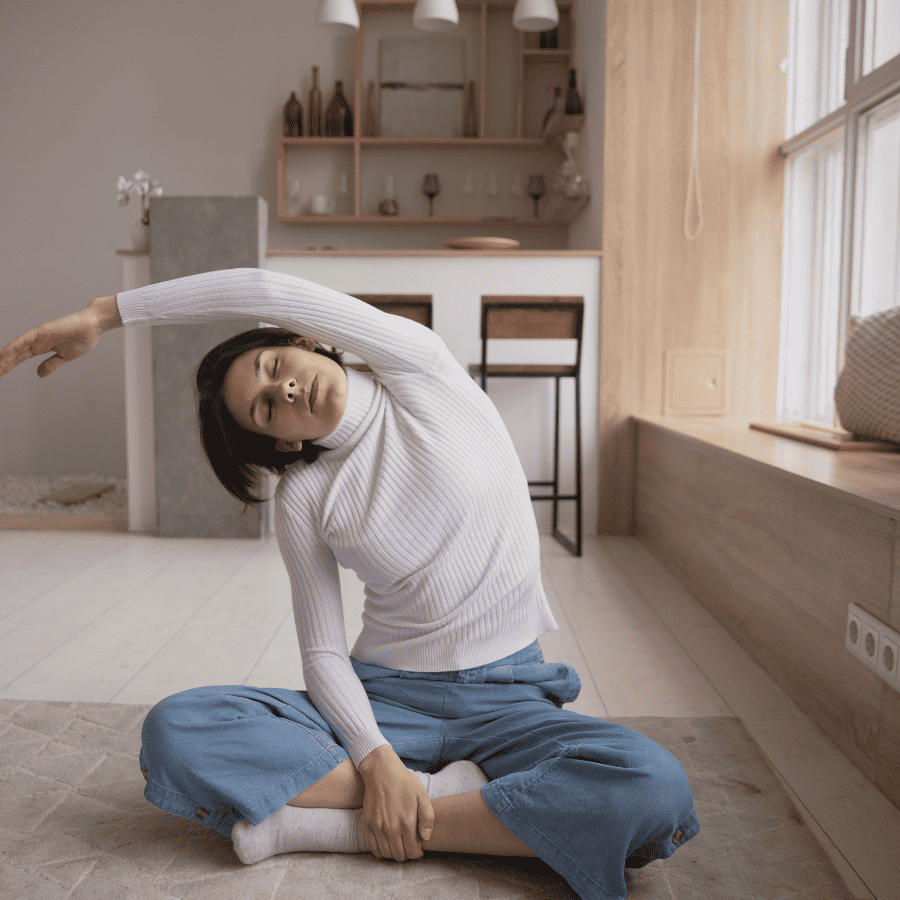
A Guide to Getting Stronger, Staying Consistent, and Finally Seeing Results
Home workouts sound great in theory. No commute, no crowded gym, no waiting for equipment, no rigid schedule.
But in reality, building a home workout routine that actually sticks is harder than it looks.
If you’ve tried before, you might recognize these thoughts:
— “I don’t know what to do.”
— “I start strong, then fall off.”
— “I’m not seeing any results.”
— “I just can’t stay consistent.”
At Breakaway Physical Therapy, we hear this all the time. And here’s the truth: it’s not that home workouts don’t work, it’s that most people aren’t given a plan that fits their body, lifestyle, and goals.
To build a home workout routine that actually works, you need a simple structure that fits your schedule, goals, and current fitness level. This guide will show you exactly how to do that.
Why Most Home Workout Routines Don’t Work
Before building something better, it helps to understand what goes wrong.
No clear plan
Random workouts produce random results. Jumping from video to video or doing whatever feels right often leads to imbalance, frustration, and inconsistency.
Doing too much, too soon
Starting with long, intense sessions is a fast track to burnout, soreness, or injury—especially if your body isn’t ready for it.
Ignoring pain or limitations
If working out hurts, you’ll stop. Many people need modifications, not more motivation.
Unrealistic expectations
Expecting fast results leads to quitting when progress feels slow. Sustainable change takes time, and that’s a good thing.
What Makes a Home Workout Routine Effective
An effective home workout routine doesn’t have to be complicated. It needs three things:
✓ Consistency – showing up regularly matters more than any single session
✓ Structure – a plan that tells you what to do and when
✓ Progression – gradually challenging your body over time
That’s it. Everything else is secondary.
How to Build a Home Workout Routine Step-by-Step
Step 1: Define what “works” for you
Before choosing exercises, ask yourself: what do I actually want from my workouts?
• Reduce pain or stiffness
• Build strength
• Feel more energized
• Support pelvic floor or postpartum recovery
• Stay active with your kids
• Get back to activities you love
Your routine should reflect your goals, not what looks impressive on social media.
Step 2: Start with a realistic schedule
Consistency beats intensity every time. Instead of asking “what’s the perfect workout?” ask: “what can I realistically commit to every week?”
A solid starting point for most people:
• 3–4 days per week
• 20–30 minutes per session
If that feels like too much, start with 10–15 minutes, 2–3 days per week. A routine you stick with will always outperform one you abandon.
Step 3: Build around the essentials
A well-rounded home workout routine includes four components:
Mobility (5–10 min)
Prepares your body to move and reduces stiffness. Focus on hips, spine, and shoulders. Examples: cat-cow, hip flexor stretch, thoracic rotations.
Strength (10–20 min)
This is where real change happens. Focus on functional, full-body movements:
• Lower body: squats, lunges, glute bridges, step-ups
• Upper body: push-ups, rows, shoulder presses
• Core: dead bugs, bird dogs, side planks
Core & Pelvic Stability (5–10 min)
Especially important for low back pain, postpartum recovery, and injury prevention. Examples: diaphragmatic breathing, core bracing, heel slides, bridges with breath.
Optional Cardio (5–20 min)
Walking, cycling, jump rope, or low-impact intervals, depending on your goals and energy.
Step 4: Keep it simple
One of the biggest mistakes people make is overcomplicating things. You don’t need 20 exercises, long routines, or constant variety.
Sample Home Workout Routine (Beginner-Friendly)
Here’s what a simple, effective 25-minute session looks like:
Warm-Up – 5 minutes
• Cat-cow
• Arm circles
• Hip flexor stretch
Strength – 15 minutes
• Squats – 3 sets of 10
• Incline push-ups – 3 sets of 8
• Glute bridges – 3 sets of 12
• Rows (band or weights) – 3 sets of 10
Core – 5 minutes
• Dead bugs – 2 sets of 8
• Side plank – 2 sets of 20–30 seconds
Simple. Effective. Repeatable. And if counting reps feels like one more thing to manage, set a timer instead, and focus entirely on your form. Slow, controlled movement produces better results than rushing through reps.
How Often Should You Work Out at Home?
Most people benefit from working out 3–4 days per week for 20–30 minutes per session, depending on their goals and schedule.
Here’s a realistic weekly structure:
• Day 1: Full-body strength + core (25–30 min)
• Day 2: Walk + mobility (20 min)
• Day 3: Rest or light movement
• Day 4: Full-body strength + core (25–30 min)
• Day 5: Cardio or active recovery
• Weekend: Flexible – walk, stretch, or a family activity
This approach is sustainable, balanced, and built for real life.
How to Stay Consistent With Home Workouts
Consistency is the hardest part, and it’s rarely about motivation. It’s about removing friction.
Leave your equipment out.
Make it visible and accessible so there’s no setup barrier.
Choose a consistent time.
Morning, lunch break, or evening—whatever fits your life. Pick the time when you feel most like yourself, not the time that sounds the most disciplined.
Use the 2-minute rule.
Commit to just 2 minutes. Most of the time, you’ll keep going once you’ve started—because your body will remind you why it’s worth it.
Build in flexibility.
Missed a workout? Busy week? That’s normal. Instead of quitting, adjust: do a shorter session, focus on mobility, or go for a walk. One missed workout doesn’t undo progress. Quitting does.
How to Progress Your Workouts Over Time
Your body adapts when you challenge it gradually. You don’t need to overhaul your routine—you just need to nudge it forward.
• Add 1–2 reps per set
• Increase resistance
• Slow down the movement
• Add one extra set
• Improve form and range of motion
Small, consistent changes lead to real, lasting results.
What to Do If You Have Pain During Exercise
There’s a difference between productive discomfort—muscle fatigue, effort, the feeling of work—and pain that’s sharp, lingering, or getting worse.
If something doesn’t feel right, don’t push through it. Modify the movement, reduce your range of motion, slow down, or take a rest day.
Common issues we see at Breakaway:
• Low back discomfort during squats or core work
• Knee pain with lunges or step-ups
• Shoulder pain with pushing or pressing movements
• Pelvic floor symptoms during impact or heavy loading
• Hip tightness limiting range of motion
Pain during exercise is a signal, not a character flaw. If symptoms are persistent, a customized plan can help you modify safely, address the underlying cause, and build strength without setbacks.
When to Get Help With Your Workout Plan
Sometimes the missing piece isn’t effort, it’s guidance. You might benefit from working with a professional if:
• You’ve tried multiple routines and can’t stay consistent
• You experience pain, pressure, or discomfort during workouts
• You’re postpartum and unsure how to return to exercise safely
• You have an injury or limitation that makes standard exercises difficult
• You’re not seeing results despite showing up regularly
A personalized plan takes the guesswork out and makes sure you’re building strength in a way that supports your body, not works against it.
The Best Home Workout Routine Is the One You’ll Actually Do
You don’t need a perfect plan. You don’t need extreme workouts or unlimited motivation. You need a simple structure, realistic expectations, and consistency.
When you build your home workout routine that way, something shifts. You stop starting over. You stop feeling overwhelmed. You start feeling stronger, and you start trusting your body again.
That’s where real results happen.
If you’ve struggled to stay consistent, dealt with pain during workouts, or aren’t sure how to structure a routine that works for your body, we’d love to help.
At Breakaway Physical Therapy, we create personalized plans that help you move better, build strength safely, reduce pain, and stay consistent. Your workout routine shouldn’t leave you guessing. It should leave you feeling stronger. 💪

Shaina Clemons
Latest posts by Shaina Clemons (see all)
- Explosive Power Matters at Every Age - September 12, 2026
- Summer Travel Tips to Avoid Neck and Back Pain - August 22, 2026
- Why Am I Always Tight No Matter How Much I Stretch? - August 7, 2026



